


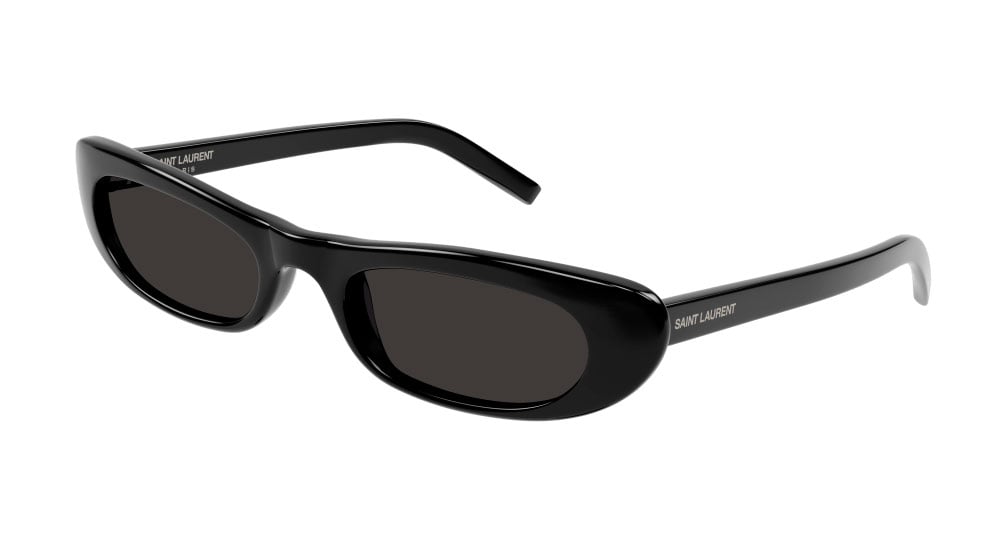


Ray-Ban Reverse glasses have concave lenses, which represents a change in shape. Normally, the curvature is outward, but in this case, it goes inward. We want to see if this is something new for our vision or if it's just a clever way for the brand to sell more glasses.
What are Ray-Ban Reverse and what's the deal with the concave lenses?
[*14720182387011,14720182518083,14720182583619*]
The new collection Ray-Ban Reverse is a very risky bet of the brand; it has been years since we have seen something like this. It changes what has always been done with the design of sunglasses. What is most striking and what people are talking about is the concave lens. Normally, glasses have lenses that curve outward, like a belly, and so they fit the face. But the Ray-Ban Reverse do the opposite: the lens curves inward. This gives a different look and the visual perception is different.
This change of shape is not only aesthetic, it goes beyond that. The idea is that light behaves differently when it hits these concave lenses. Normal lenses, those that are convex, distribute the light in a way we already know. But Reverse, with its inward curve, promises to handle reflections differently, making people perceive things differently. They have launched this collection using classic Ray-Ban models that everyone knows. They wanted to give them a modern and daring touch, like futuristic. It's a mix of the brand's tradition with something new.
A surprise change: the Reverse idea
Ray-Ban launched the Reverse for a clear reason: they wanted to do something different and get people talking about it. The eyewear market is sometimes full of similar things. The brand needed a way to change, but still be Ray-Ban. The goal is to "break with business as usual," to challenge how eyewear was made before. They wanted to surprise those who always buy from them and also attract younger people. It's a big bet.
How the concave lenses were made
Ray-Ban uses a complicated process for their Reverse Concave lenses. They use very good materials, such as a type of plant-based nylon. This helps reduce the carbon footprint. They design the reverse curvature so that the light is directed properly. This way, they aim to make the sun less glare and everything looks brighter. This design is unique. The lens captures the light in a different way. The brand says it looks more comfortable and sharper this way.
Reverse Collection Models You Can Buy
The Reverse collection revitalized classic Ray-Ban models. They now incorporate these new concave lenses. Some models that changed are the Aviator Reverse, the famous Wayfarer Reverse, the Caravan Reverse with a good style and the Boyfriend Reverse with a more current design. Each of these models still has its original shape. But the concave lens gives them a different, more modern look and catches the eye.
The Good and the Bad: How Do Concave Lenses Really Perform?
[*14720182616387,14720182649155*]
Ray-Ban claimed that its Reverse collection would change our visual perception. But is all that true in everyday wear? Let's take a look at how these concave lenses work. We want to see if the claimed benefits are real. We also want to see if they have any unusual problems or effects.
The Good for Seeing: Clarity and Visual Field Width
Ray-Ban claims that their Reverse concave lenses eliminate solar reflections and improve visual sharpness. They apply a special state-of-the-art anti-reflective treatment. Thus, the lens reflects neither inside nor outside. This results in less glare and a clearer view. It is very useful in bright conditions or with reflective surfaces. The curvature is different, but the field of view, i.e. the width of vision, does not change. Many people say they see well, without distortion, especially in the center.
How They Look: A Different Visual Appearance
They look great, that's undeniable. The concave shape makes them unique, they look very modern. From the outside, the lens dips down a bit, creating a simple yet sophisticated effect. This design breaks with convention, appealing to those who want to be different and are looking for something modern. Ray-Ban Reverse marks a milestone in fashion, changing what the brand has always done.
Possible Challenges or Adaptation
Most people get used to them very quickly. Some, however, may take a little while to get used to wearing them. At first, you may notice slight distortion, such as changes in size or distance. That happens when the shape of the lenses is different, but disappears with continued use. In any case, Ray-Ban Reverse are designed to be comfortable; the brand always prioritizes comfort.
Sun protection and how they filter light
Any sunglasses must protect you, that's fundamental. The lenses of these Ray-Ban Reverse are more than up to the task, as the brand is very demanding. They offer total protection against UVA and UVB rays, so your eyes are safe. They incorporate very good color filters, which improve color perception and contrast; this is useful in a variety of light conditions. Some versions also have an optional polarized filter, which significantly reduces sun glare.
Is this a real novelty or just marketing to sell more?
Many people ask this question about the Ray-Ban Reverse - is the concave lens something really new in eyewear manufacturing? Or is it just a clever idea for the brand to differentiate itself and sell more? To know the truth, you have to consider all aspects. Thinking about Ray-Ban's history and the user experience is important.
Ray-Ban's history of innovation
{*640121733443*}
Ray-Ban is always looking for novelties. The brand introduced many important innovations, for example, G-15 lenses, which offered natural vision and significantly reduced glare. Then polarized lenses became widespread, significantly improving vision. Now, the concave lenses of the Reverse are their latest innovation, another step in further exploration. It's not that they transform vision as much as polarized lenses, but the design is very bold, that's undeniable. It's a curious evolution, it's in line with your trajectory.
What do people say about the first buyers?
What people who already have Ray-Ban Reverse say is somewhat varied, but there are common points. Many like the way they look, it's a unique and striking design. As for seeing through them, most say it looks clear and comfortable; there's no distortion, unlike what some expected. The anti-reflective treatment is very good, it reduces glare considerably, which is noticeable. No one is saying that the concave lens is a "revolutionary" change for the eye, a level of improvement not found in other high-end lenses. It seems more like a mix of a different design and good, traditional-like vision.
In the luxury eyewear market, where are they?
There are now many luxury eyewear brands; competition is intense. Innovation is key to differentiation. Ray-Ban Reverse helps the brand remain a reference brand, justifying its luxury positioning. By offering something that looks very different, Ray-Ban not only attracts new consumers, but also positions itself as a design leader, setting trends. It's a smart response. There are a lot of glasses on the market; they create their own niche by offering something unique.
New and exclusive: the key
That Ray-Ban Reverse is something new is crucial to its appeal. It generates curiosity and a desire to try something very different. It also confers exclusivity. The opportunity to be an early adopter is a buying factor. It is not only due to the quality of the vision they offer. People want to have something unique, something cutting edge; that's a powerful motivator. They become an object of desire. They are unique, people talk about them, beyond a significant improvement in vision.
Ray-Ban Reverse and Regular Lenses: A Head-to-Head Comparison
[*14720182747459,14720182124867*]
If you want to know if Ray-Ban Reverse are worth the money, you have to compare them to traditional lenses. This text will discuss their differences, the visual experience they offer and their value for money.
Design and Functionality: Their Main Differences
The main difference lies in their curvature. Traditional lenses are convex (curved outward). Reverse lenses are just the opposite: they curve inward, being concave. It's not just that they look different; it changes how light hits them and how you perceive your surroundings. With Reverse, they use a special process to minimize internal and external reflections. Normal lenses try to address that with other coatings or additional layers.
- Curvature: Traditional lenses are convex (curved outward); Reverse lenses are concave (curved inward).
- Visual appearance: Normal have a more convex appearance; Reverse have a flatter profile on the outer surface.
- Interaction with light: Normal lenses scatter light; Reverse lenses reduce glare better.
- Materials: Both use quality materials, but the Reverse incorporates plant-based nylon.
How To See With Them: Are Concave Lenses Better?
Seeing with inward-curved lenses, for many, is a subtle improvement over the existing, not a revolutionary change. There is a noticeable reduction in glare, which contributes to clearer, less fatiguing vision, especially in bright sunlight. But you don't see much sharper or wider than with a good traditional Ray-Ban. The big difference is that you experience greater comfort thanks to less glare, and some say the environment feels more integrated into the lens, creating a sense of envelopment. It's subtle, but noticeable.
How Much They're Worth and What You Get for That
Ray-Ban Reverse lenses come at a premium price. This is due to their innovative technology and special manufacturing process. Their design is innovative, with a distinctive look. Their excellent glare reduction is a strong point. If you value novelty and exclusivity, then the additional price is justified. If you just want to see well and don't care about design, Ray-Ban's regular lenses are a great option, which also offer excellent performance.
Ray-Ban Reverse lenses have the lens curved inward, being concave. The traditional ones, on the other hand, have the lens curved outward, that is, they are convex. Visually, Reverse lenses are perceived as sunken, with a modern and minimalist style. Traditional lenses maintain their classic and more convex look, the familiar, more convex look. Reverse lenses offer excellent glare elimination thanks to an advanced anti-reflective treatment. Traditional lenses also eliminate glare effectively, using standard or polarized treatments. The materials used are of high quality in both cases. The Reverse lenses use a high quality bio-based nylon, while the classic lenses are made of glass or polycarbonate, also of good quality. Visual comfort is very high in both, although the Reverse may require a short adaptation period. With the traditional ones, the feeling is familiar. The design of the Reverse is innovative and groundbreaking. Traditional is timeless and never goes out of style. In terms of price, the Reverse are more expensive, while the normal ones have the standard price of the brand.
Are Ray-Ban Reverse for you?
[*14720182944067,14720182976835,15050952016195*]
Once you have analyzed them, it is time to determine if Ray-Ban Reverse are right for you. They are very special and, therefore, perfect for certain profiles, while others may prefer traditional glasses.
Who They're Perfect For
- Fashion and trend lovers: If you like fashion and are looking for a different accessory with a modern style.
- Eyewear collectors: They are a must-have for those who appreciate Ray-Ban and want an iconic model with a novelty.
- People looking for differentiation: If you are looking to stand out and wear something unique, the distinctive style of the Reverse is for you.
- Users demanding visual comfort: For those who want a very clear and glare-free vision, with constant visual comfort in any light condition.
Things to Think About Before You Buy
- Try them on: The look and comfort are very personal. Visit an optician to try them on, feel how well they fit your face and experience the vision they offer.
- Think about your style: Consider whether their modern and distinctive design aligns with your personal style and outfit.
- Look at the price: Keep in mind that these glasses are priced higher than other traditional Ray-Bans.
- How to care for them: Concave lenses require the same care as other quality lenses: use microfiber cloths and special liquids, avoiding abrasive materials to protect the anti-reflective treatment.
Conclusion: Is buying Ray-Ban Reverse a good idea?
Ray-Ban Reverse came to the market with a different idea, redefining sunglass design with its innovative concave lens. After a thorough review, we'll help you decide if they're worth investing in.
The bottom line in a nutshell
Reverse glasses are special because of their modern design and effective glare elimination, thanks to their lens technology. They offer remarkable, though not revolutionary, visual enhancement with great comfort and indisputable clarity. They are worthwhile for their functionality and distinctive style.
Our Expert Opinion
Here at Bassol Optics, we believe that Ray-Ban Reverse combines innovative and distinctive design with a noticeable, albeit subtle, improvement in vision. They are not just a marketing ploy; they represent a genuine exploration of new aesthetic and functional possibilities. They offer clean, comfortable vision in a design that is sure to turn heads. If you're looking for sunglasses that fuse Ray-Ban tradition with a modern twist and effective functionality, the Reverse is a great choice and an excellent investment.
Where to Buy Ray-Ban Reverse
To purchase your original Ray-Ban Reverse and ensure authenticity and the best service, we invite you to explore the entire collection at Optica Bassol. We have a wide selection of models and offer expert advice to find the perfect glasses for you.


