




Have you ever been curious about that number your eye doctor tells you after your appointment? It's a unit of measurement called a diopter, a way to measure and correct vision quality .
Although the evolution of the human eye It is amazing, there are eyes that are too short or too long, irregular corneas, among other imperfections. This causes various alterations in vision.
The diopters are useful for correcting these defects. Used since the second half of the 19th century and coined by the French ophthalmologist Ferdinand Monoyer, this term refers to the power needed for your eye to see clearly .
How is vision graduation measured?

To measure visual graduation and determine diopters, the visual health specialist It has various instruments and tests.
The most common tests are the Snellen test, the Landolt test and the use of the phoropter.
The Snellen test is the classic chart with letters in decreasing size. It was designed in 1862 by the Dutch ophthalmologist Herman Snellen.
During the Snellen test , the person being examined is placed at a distance of 6 meters from the card and is asked questions about the letters he sees. The last row in which he is able to read the characters accurately defines the patient's visual acuity.
For its part, the Landolt test uses discontinuous rings instead of letters. It was created by Swiss ophthalmologist Edmund Landolt for patients who cannot read, or who have trouble identifying letters.
This test consists of identifying where the discontinuity is (up, down, left, right) in circular characters called Landolt rings.
Finally, the phoropter is an instrument containing a series of lenses of different diopters that are placed in front of the patient's eyes. As the lenses of different diopters are tried on, the patient is asked to identify which ones provide the clearest and sharpest vision.
Diopter tables
Nearsighted people have a larger eyeball, which causes blurred distance vision. To remedy this, diverging or negative lenses are used.
Hyperopic users, on the other hand, have a shorter eyeball, which means they will have poor vision up close. This can be solved by using convergent or positive lenses.
Finally, to solve an astigmatism problem, toric lenses are used.
Diopter tables indicate the relationship between visual acuity, focal distance and even the curvature required for your glasses lenses .
Here you can see a summarized diopter table:
| Diopters | Type of visual defect |
| -0.5 | Mild myopia |
| -1 | Moderate myopia |
| -2.5 | High myopia |
| +0.75 | Mild hyperopia |
| +2 | Moderate hyperopia |
| +4.5 | High hyperopia |
| +1.25/-0.75 | Combined astigmatism |
All prescription and visual acuity tests are used to determine the diopter needed to correct your vision.
Other methods of visual grading

Some methods that make use of new technologies can complement your visual consultation. Among them we have:
Autorefractometer - what is it?
It is a machine that we ophthalmologists use to obtain a patient's objective prescription, that is, one that does not depend on their verbal responses.
Created in the 80s, These computers are capable of objectively calculating the refraction in the tear duct, cornea and lens . Their margin of error does not usually exceed +/-0.50 diopters, provided that the equipment is correctly calibrated and has timely maintenance.
Corneal topography, what is it?
It is a noninvasive diagnostic test used to determine the characteristics of the cornea. This method measures the curvature and shape of the anterior surface of the cornea . The result is based on computerized analysis of images obtained by videokeratoscopy (a photographic technique that creates a 3D map of the surface of the cornea).
Aberrometry, what is it?
It is a non-invasive ophthalmological test that allows studying the optical quality of the visual system.
By analyzing the wave front The structures involved in the refraction of light, such as the cornea and the lens, are studied . Through this test, the ophthalmologist can obtain information about the quality of the images perceived by the patient.
Like corneal topography, it is essential in patients who are candidates for refractive surgery.
Can you change your vision prescription?
Yes, it can change over time . Because of these gradual changes, you may require adjustments to your glasses prescription. That's why it's important have regular check-ups with an optometrist .
One of the natural changes in our vision is presbyopia. From the age of 40, you may find it harder to focus on nearby objects. This loss of visual acuity is caused by the hardening of the lens inside our eye.
Besides, Some diseases that will change your vision are : cataracts, macular degeneration, trauma, complications due to diabetes, and dry eye.
Recommendations to improve visual acuity and prevent diseases

The importance of our vision is incalculable, so don't take it for granted. There are many recommendations to take care of your visual health, here we share some of them with you:
- Take care of your diet . Maintaining a healthy and balanced diet is essential to preserve eye health.
- Use sunglasses . They will allow you to protect yourself from ultraviolet rays that are very harmful to our eyes.
- Visit your ophthalmologist regularly . It is recommended to visit at least once a year.
- Keep your eyes hydrated . In addition to drinking adequate amounts of water, it is also advisable to blink frequently to prevent dryness and eye irritation.
- Maintain hygiene if you wear contact lenses . Good hygiene of both the lenses and the container that stores them is essential to avoid infections.
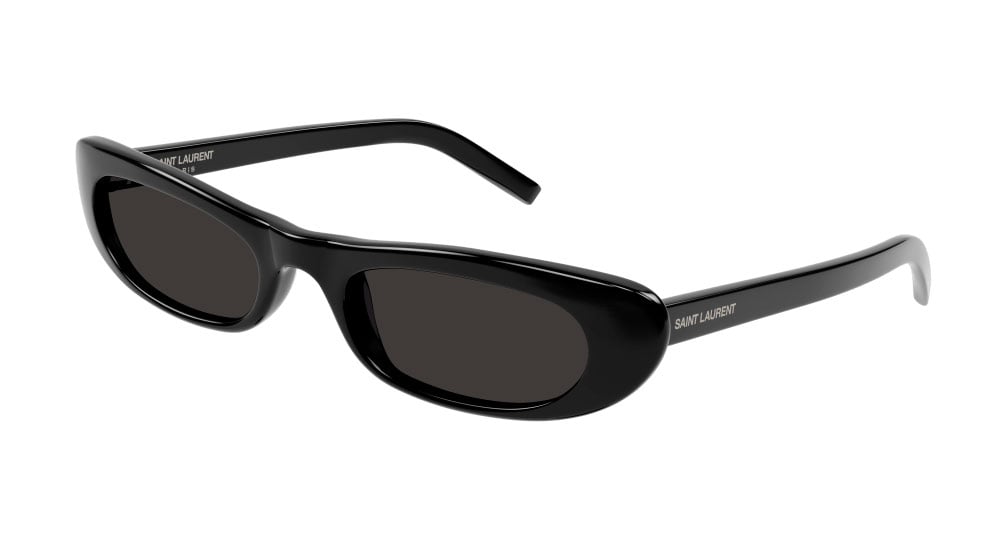
- Always use high-quality glasses . At Bassol Optics we have different options for original glasses. If you are looking for a look elegant, the Saint Laurent prescription glasses are your best option. If you are into more contemporary frames, be sure to check out our Cutler & Gross prescription glasses .
Zeiss lenses, the perfect lenses for optimal vision


Many times patients have a combination of myopia and astigmatism in their diagnosis, so they need different formulas to correct both problems.
Technology has allowed progress in this area. Previously, multiple lenses with different diopter formulas were used, then bifocal glasses to remedy this. Nowadays, we are talking about progressive lenses, which allow different formulas in the same uniform lens.
If you want comfort, convenience and cutting-edge technology, the Zeiss lenses will be your best option. These German lenses allow for a more natural and optimal visual correction .
Get the best options in prescription glasses at Óptica Bassol!
In addition to having a wide catalog of prescription glasses , Bassol Optics makes free deliveries throughout the Peninsula (Spain) . We also ship to all countries in the world with the following companies: Fedex, DHL, UPS, and Correos Express. Transit times vary depending on the destination from 1 to 7 days.
If for any reason the product purchased in our online store does not satisfy you, you have 14 days from the delivery date to make a return. changes or returns .
If you want to have an ophthalmological check-up or it is your first consultation, schedule your appointment at the branch of your choice.
Don't forget to subscribe to our newsletter to get access to the best promotions on glasses!


