


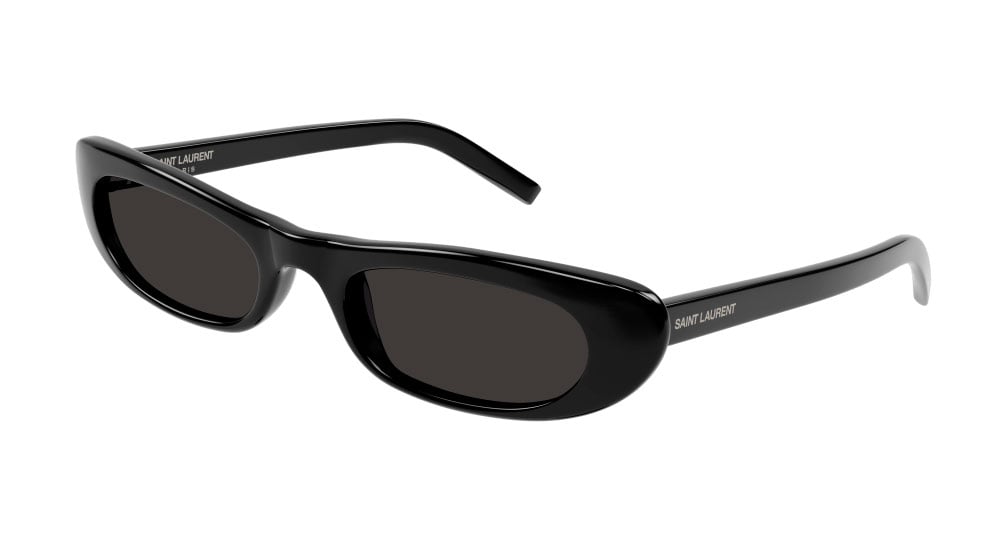


The problem in 2025. Buying something handmade forever or technology that lasts only a short time?
The eyewear market has two major paths in 2025. It's not just about the frame anymore; it's a major decision. Smart glasses are growing a lot, some say they will go up 60% this year, that's barbaric. The big tech companies are pushing them hard and they offer a future with always-on connectivity. You can translate things on the spot and take pictures without using your hands; it all goes right to your eyes.
On the other side are luxury eyewear, an established market that works well. You don't sell internet connectivity here; you sell something that lasts, that's what's important. Now in 2025, luxury in eyewear is about being discreet, it's called "quiet luxury" and we value what is well made. You see this in expensive materials and designs that don't go out of style. In the end, it says a lot about who you are.
The buyer is left right in the middle of this mess. Choosing is no longer just about looking good, it's a tactic. Are you going to spend your money on something useful that's going to break or become outdated in two years, or on handmade glasses that are going to last you a long time? Here we'll look at which is better: the quality of the handmade or the usefulness of the technology, so you'll know which type of eyewear is better for you right now.
What are "Luxury Eyewear" in 2025 (Something that lasts a long time)?
If we want to compare, we must first explain the real value of luxury, not just its price. Luxury eyewear is worth three things, people see it that way: the materials and how they are crafted, whether the design is classic, and lastly, people see it as a long-term investment of money..
It's not just the brand: the materials (Acetate and Titanium) and who makes them.
Expensive glasses are noticed for their very good materials and the way they are made. This is the opposite of fast fashion and mass production. The materials really change how you wear them. Good quality acetate comes from plants, is lightweight, allergy free and you can adjust it to your size. Titanium is very strong, weighs very little and doesn't rust, perfect if you want to wear them every day.
These materials are very different from the bad plastics or alloys you find in fast fashion frames. The manufacturing is the other important point that differentiates them, in addition to what has already been said. Artisans handcraft many of the expensive frames, they achieve a perfection of workmanship that is very noticeable.
Discreet Luxury Coming: Trends for 2025 and 2026
Luxury for 2025 and 2026 is not about being ostentatious or flashy. What's hot right now is "quiet luxury" or quiet luxury. This is discreet luxury where all the details matter a lot. They are more concerned with actual quality than showing off huge logos. Up and coming fashions include very deep black, bold geometric shapes and some very subtle gold detailing shining on the temples. Big brands like Dior, CELINE, Saint Laurent and Cartier are doing this, creating things that are sophisticated but not loud.
Are buying luxury eyewear a good long-term investment?
Yes, they are. Expensive eyewear isn't like tech gadgets that get old; it's a real investment. The value is that they last a long time. They are made to last you a lifetime. This reduces you buying so much and generating junk. If you invest in something of high quality you ensure better performance, more comfort and that they last a long time.
This durability is the big difference with technology. Smart glasses have batteries that go bad and the software gets old. They are like the "fast fashion" of technology, they die fast. Luxury eyewear, on the other hand, is "Slow Luxury". A Ray-Ban Meta can serve you for three years, but a Cartier can stay with you for thirty.
What are Smart Glasses in 2025 (The AI craze)?
The smart eyewearmarket looks like one group, but it's not. It is very fragmented in a strategic way. The value of glasses changes a lot, it's not the same for all because the products serve different things, different uses. If you want to analyze this well, you have to divide the market and not just use the label "smart."
The Giants of Capture and AI: Ray-Ban Meta and Oakley Meta
{*647488766275*}
The Ray-Ban Meta lead the market in 2025.1 They sell a lot because of the generative AI they have, a design that looks good, and features that do work for everyday wear. The glasses use the Meta AI assistant, so the person can ask questions about what they are looking at at that moment, translate things they read and even record videos and take photos without using their hands, as well as send the content to Instagram.They have audio that goes directly to the ear to listen to music or calls. They are comfortable and practical, and can be fitted with prescription lenses if you need them.
There is another version which is the Oakley Meta, which uses the same technology but for sports. They were designed with performance in mind, so the battery lasts much longer and the camera works better when you're on the move.
Wearable Displays: Xreal Air 2 Pro and Watch Stuff
This is a totally different category, but people often confuse it with the other. The Xreal Air 2 Pro is not looking to compete with luxury brands, it's more like competing with regular TVs or monitors. Their gimmick is that they aim to replace all the screens you use, giving you a giant 130-inch screen that you can wear, made just for you to consume content. They weigh very little (75g) and you can connect them to consoles like the Nintendo Switch or Steam Deck, plus they have good audio.
It's bad to put together the Meta, which are for use outside and record things, with the Xreal, which are for watching videos indoors. If you are a luxury buyer, you will never see the Xreal as something stylish. But the same buyer might think about buying the Ray-Ban Meta because they look discreet. The real "Luxury vs. Smart" fight is over glasses that are for the environment, not for watching movies.
What's Coming: Apple, Samsung and the Glasses Fight.
The market is still very much scattered. Apple looks like it's coming in soon, and this always changes what people expect from a product, as has happened before with other things they made. There is talk of a "war" where we will see a lot of new smart glasses. Samsung is also getting ready to bring out theirs.
Quick Comparison: Luxury vs. Technology (How Much Does It Cost to Get Old?)
When we put these two categories head-to-head, what matters is whether you want good vision or technology. Smart glasses bring cameras, small screens and audio; regular glasses only focus on correcting what you see or seeing you well.
Expensive glasses also use a lot of technology, but it's optical technology. The luxury value is in the "really good lenses with full UV400 protection, which don't reflect anything and look super sharp." Experts say the quality is very noticeable in the "anti-reflective treatments" they put on the glass, and in the material of the glass itself. Sometimes the price of luxury goes way up because of the distribution monopolies that control it, but still, good materials and quality of vision are key.
This chart below shows the difference in value between a model in each category by 2025.
|
Feature |
Luxury Eyewear (Like Cartier, Dior) |
Smart Glasses (Like Ray-Ban Meta) |
|
Materials |
Titanium, Handmade Acetate |
Good injection molded plastic 1 |
|
Durability/Service Life |
10 to 20 years or more ("Slow Luxury") |
2 to 4 years (Battery damage, "Fast Technology") |
|
Main Functionality |
Perfect vision, Sun protection, Be of status |
AI, Camera, Audio, Callable, Translatable, Translates |
|
Obsolescence |
None (Style never goes out of style) |
A lot (Depends on software and battery) |
|
Resale Value |
Medium to expensive |
Almost none (after three years) |
|
Price (Approx.) |
$500 - $1500 or more |
$300 - $650 |
If you look at the table, you see something important: the base price of smart glasses ($300 to $650) is similar to the price of luxury glasses (which start at $500). This tells us that the purchase price is not what decides whether you buy them or not.
What really matters is the Total Cost of Ownership (TCO). If you buy expensive glasses from $600 that last you ten years, they only cost you $60 a year. Smart glasses from $350 (like Meta) that need to be thrown away every three years cost you about $117 per year. So, believe it or not, luxury eyewear is the cheaper option if you're thinking about the long term.
We took a closer look at Even G1 Glasses (Are they Luxury and also Tech?).
We looked at the competition and there's a big gap: no one is mixing luxury with technology in a decent way, and that's a mistake. Even G1 Smart Glasses came in to fill that gap perfectly. This product is just what people are looking for when they ask if something is luxurious or smart.
What are these G1 Smart Glasses and why are they unlike any others?
The brand says the Even G1s have a subtle design with the technology well hidden. Meta glasses use cheap plastic, but here they tucked in luxury materials, for example, magnesium alloy and titanium frames. The design is simple, looks stylish and is very light. They say they are super light. The goal is that no one notices that you're wearing technology on your face. They just look like regular glasses, and that's a good thing.
The most important thing: The AR screen that no one sees, the ChatGPT and the Teleprompter.
Here's the main difference: the G1s have no camera and no audio. This means that they are not for those who create content on networks, they are tools just for you to be productive. The best thing about them is their waveguide AR screen, which is a front screen that only the user can see, no one else sees your notes.
Their main functions are for people who work:
-
AI assistance (ChatGPT): you can ask questions and the AI answers you, you can also take quick notes.
-
Navigation: Gives you exact directions, step by step, right on the screen.
-
Translation: Translates languages on the fly, you see it on your screen without anyone knowing.
-
Teleprompter: This is very useful for public speaking, because the speaker can read all his notes while looking at people.
The good and bad of it: We review what people say (Pros and Cons).
We look at the 2024 and 2025 reviews, so we know how good they really are:
-
Pros: The design is subtle and people praise the expensive materials. The battery lasts a long time, easy to go past the day wearing them. They are very comfortable and weigh nothing. The productivity thing is great, the teleprompter changes everything for business people.
-
Cons: The screen is limited, you only see it in low resolution and black and white. Not a lot of apps you can use. A lot of people don't want them because they don't have audio or camera, that's a big deal. The software is the worst complaint, it is immature and the Bluetooth connection is always giving problems.
What is the price of the Even G1? Let's see the cost for this year 2025
The Even G1 cost the same in almost all stores and on their website, they start at $ 599.32 That price is high, they are not just any "gadget", they are already in the price segment we call "luxury to start".
The G1s are something else, they create a new category. They are not useful if you are a "creator" because they do not have a camera, nor for "gamers" because the screen is black and white. They are for the real "executive", for someone who needs to be productive but wants it to be discreet, with teleprompter and AI. These people ask for good materials and a "quiet luxury" look.
What really matters: can you put prescription lenses on these smart glasses?
Many people don't buy them because they wonder if they work with prescription lenses. This is important, regular and luxury glasses have always been able to be prescription lenses without a problem.
Now in 2025, this advantage no longer exists. We check and see that the best-selling smart glasses already work with prescription:
-
Ray-Ban Meta's say "You can put prescription lenses in them."
-
The Xreal Air 2 have "prescription lens compatibility."
-
The Even G1s advertise them as "prescription ready."
You no longer have to think about whether you need prescription lenses, because that doesn't matter in deciding what to buy; both options solve the problem for you. This is good, but it does make people have to think again about the age-old dilemma: do you want something that looks great and lasts a long time, or do you prefer something with a lot of technology and connectivity?
Questions people ask a lot
These are the frequently asked questions that show the biggest consumer hesitations when making a choice.
Are smart glasses just a fad or will they be the future?
It seems that they are the future. The market is growing a lot, we are noticing this. They are also attracting more people, especially young people who love technology. Artificial Intelligence is now easier to use, the designs are better and they hide the technology, so they are becoming the fashion accessory that we are going to use in the future, but they are not perfect yet.
Is it really worth spending on expensive luxury eyewear?
Yes, if you define them as a long-term investment, they are worth it. The value of luxury eyewear comes from high quality frames, their lenses are superior and give better optics or eye protection, and they have a classic style that doesn't get old as fast.
Which is better: Ray-Ban Meta or the usual expensive sunglasses?
This depends entirely on the type of person who will be wearing them. The Ray-Ban Meta are pretty good if you're a content creator, vlogger, or you're into AI, because they bring camera and a very useful artificial intelligence assistant. Luxury eyewear is better for the consumer who is looking to make a long investment, wants the best quality materials, and needs their style to stand the test of time well.
Conclusion: Verdict 2025 - Which eyewear should you buy?
There is no single pair of eyewear that will win this year 2025. The best choice depends on who you are, what you need them for, and how you like to shop. Let's break down the verdict into three buyer profiles.
Verdict 1: Buy Luxury Eyewear if...
... you value things that last. If you see eyewear as a very long investment (as in the "Slow Luxury" concept) and you like craftsmanship, you want top materials like titanium and acetate, plus the best optical quality. This is the choice for those who are looking for a style that lasts forever, that "quiet luxury" aesthetic that matters more than any functionality with technology.
Verdict 2: Buy Smart Glasses (Ray-Ban Meta) if...
... people want things to work fast. This is what the early adopter, content creator orthat tech enthusiast who lives glued to the AI ecosystem chooses .The priority is to use the "hands-free" feature (camera, audio, calls, AI) 1 and no matter the "fast tech" cycle, you're going to change the device every few years to have the newest technology, you accept it.
Verdict 3 (The Middle Ground): Buy the Even G1s if...
... you value unobtrusive productivity, period. This is the profile of the professional or executive. You are looking for a subtle design with premium materials, such as titanium, but you don't want a camera, you reject it for privacy or aesthetics. You choose this model if you need specific functions, perhaps a teleprompter for your presentations or you just want an AI assistant that is discreet.
Choosing now in 2025 is not deciding between two products, it's more like choosing between two philosophies. Should you invest in craftsmanship that lasts forever or in intelligence that passes quickly? Your decision defines how you see the world.


