





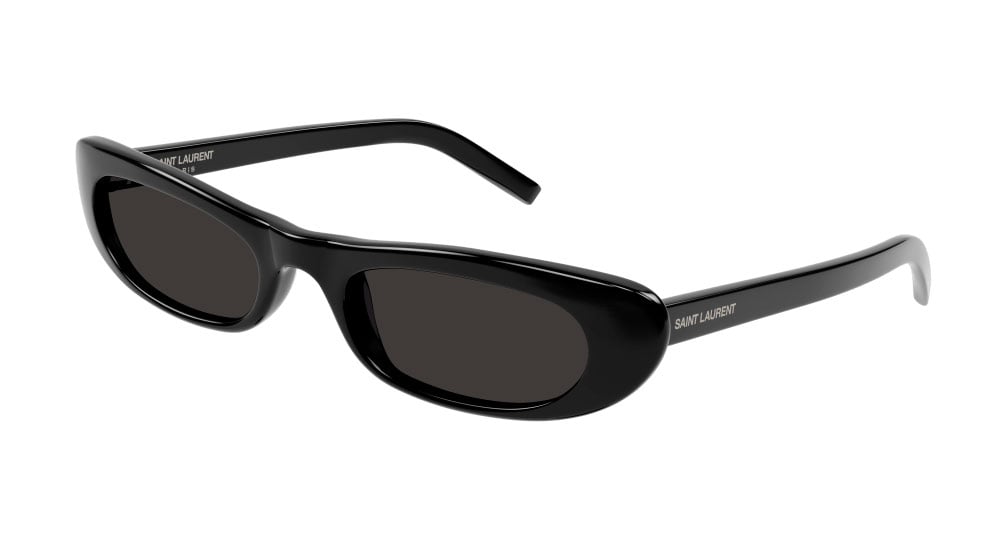


Drugstore reading glasses are a quick and inexpensive solution. But they are not custom-made, which is key to good vision. Instead, opticians will do an eye exam and get your glasses properly centered. This is very important for your eyes, so that you are comfortable and don't have problems later.
What Are Reading Glasses and When Do You Need to Wear Them?

Reading glasses are for presbyopia. It's a normal part of aging, making it hard to see up close. It usually appears after the age of 40, your eye becomes less elastic, that's why you can't focus on small texts or close work. If you move objects farther away to see them, get tired reading, get a headache or see blurry when doing things up close, you need reading glasses for sure.
Drugstore Reading Glasses: Convenience vs. Risks
Reading glasses sold in drugstores are very popular. They're fast and inexpensive. But beware, they have risks to your eyesight. People don't usually think about this. They are standard, so they don't fit every person's eyes well.
The Attraction of Immediacy and Low Cost
Many people buy drugstore glasses. They are easy to get, you can find them in any store. You don't need a prescription and they don't check your eyes first. The price is much lower than custom-made glasses. Therefore, they are a tempting solution if you want to see better up close quickly and without spending a lot of money or time.
Drugstore Glasses: Can Be Bad for Your Eyes
Drugstore glasses have a problem, they are very generic. They make them all the same, with the same prescription in each eye. They use a standard optical centering, as if we all have the same pupillary distance. But everyone is different, some people have an asymmetrical face or need a different prescription for each eye. That lack of precision makes your eyes strain more than normal, your head may hurt and you see worse, you are not comfortable.
Optical Glasses: The Perfect Choice for Your Eyes
{*640119439683*}
To take care of your eyes, opticians are the best. They focus on tailoring everything to you, with a lot of precision. So each pair of glasses is perfectly adapted to your characteristics. An optician-optometrist is vital, no one can replace him. He not only wants you to see well, he also protects and takes care of your eyes for a long time, so you won't have any problems.
At the optician's you get a complete examination, not just the prescription.
At the optician's, it all starts with a complete eye exam. It is done by an optician-optometrist who knows a lot. This exam doesn't just look at your presbyopia prescription, it goes further. He looks at the health of your eyes in general, looking for cataracts or glaucoma. He also measures the pressure in your eyes, checking to see if they work well together. With this personalized advice, your eyewear solution not only makes you look good, it also takes care of your eyes as a whole, that's the best.
The Centering of Your Glasses is Key (The Distance Between Your Eyes)
Optical centering is very important, almost no one pays attention to it. It has to do with interpupillary distance (IPD). The IPD is simply the distance between the center of your pupils. In optics, they measure this very precisely, to the millimeter. This ensures that the center of each lens is right where your pupil is. A good centering is essential for the light to pass through the best point of the lens, you see much better. If the glasses are not well centered, the light does not enter as it should, this creates a prism effect. Your eye has to compensate for that, you get tired, you see distorted and you feel bad. Drugstore glasses have a generic centering, they rarely match your DIP, this is a risk for your eyes and your comfort, I do not recommend them.
As a specialist at Bassol Optics said:
"Getting your lenses properly centered is as important as the prescription, it's key. If your glasses have the right prescription but are poorly centered, it's like a car with a great engine but crooked wheels. It's not going to run right, and over time it's going to get you into trouble."
Consequences of Poorly Centered Reading Glasses
If you wear poorly centered glasses all the time, you can have a lot of problems. Not only are you going to feel uncomfortable every day, but it also affects your eyes later on. You need to see these symptoms early and do something about it, so you take good care of your eyes.
Immediate and Long-Term Symptoms
Problems due to poor centering appear quickly. You feel a lot of tiredness in your eyes, headaches in your forehead or temples. You often see blurry at times, get dizzy, can't focus well or have dry eyes because your eyes are strained. If this goes on for a long time, your eyes strain a lot and that makes you see worse little by little, light bothers you more and sometimes you may have eye muscle problems that require more complex solutions. Crazy.
Why Shouldn't You Ignore These Signs?
If you ignore these signs that your glasses are poorly centered, it takes away from your quality of life. You can't read well or work on the computer, for example, and it damages your eyes in general. The effort you make all the time to get the lenses to work right causes more eye problems to appear, or the ones you already have to get worse. Buying glasses that are properly centered is good for you, helps you be more productive and prevents eye problems later on. It's not just any expense, it's an important investment in your health, just so you know.
How to Choose Your Reading Glasses Wisely

Choosing your reading glasses well is very important for your eyes, also to feel good. Don't just look at the price or how easy it is to buy. Think about how accurate they are, how well they are fitted, a professional is better. Here are some tips to make your new glasses last.
A Professional Helps You Better
The best thing to do is always go to an optician you know and trust. Only that person can look at your eyes thoroughly, knows your prescription for each eye. He also measures the distance between your pupils well. With their help, you will have glasses made just for you, that fit you well. This way you avoid problems if you buy glasses that aren't right for you.
What to Ask When Buying Glasses
When you go to the optician, ask questions without fear. Ask what prescription you need for each eye, what type of lens is best for you. There are normal or progressive lenses. Also ask if there are extra treatments that work for you, such as anti-reflective or blue light filter. It is very important that they measure the distance between your eyes and the center of the lens. A good optician will tell you everything, help you choose the glasses and lenses that suit you. Think about how you live, what your face looks like. You can also look at offers like the Day Night Offer or the Moson Offer. Sometimes they are good options.
Take Care of Your Eyes: Don't Save on Them
In the end, choosing between drugstore and optical glasses isn't just about the money. It's about your health, about how you feel. Drugstore glasses look easy to buy, but they're not custom-made. They're not exact, and that can damage your eyesight. The optician gives you a complete service, they check your eyes well, they put your exact prescription. They center the glasses carefully. So you see clearly, comfortably and your eyes are protected. Your eyes are very valuable, they need the best care. Don't save money now and then have problems with your eyesight; better invest in quality and good work that only an optician like Optica Bassol can give you. Look at our Sunglasses, we have brands like Ray Ban and Persol. Call us to look at your eyes. We will advise you.
Doubts that people have about reading glasses.
Are there differences between pharmacy glasses and optical glasses? Which ones?
Pharmacy glasses are generic, they are not special for anyone. They have the same prescription for both eyes, the centering is the same for everyone. Opticians' glasses are something else, they are just for you. They put the exact prescription in each eye, they measure your interpupillary distance very accurately, this happens after checking your eyesight. Sometimes you just need to read.
Is the centering of the glasses so important, tell us why?
Of course it is, it is very important. Imagine that the centering makes the center of each lens to be right where your pupil goes, so the light enters perfectly. If it is not well centered, your eyes get tired. You get a headache, you see everything blurry. Your eyes have to work hard to fix what looks wrong, it's extra work.
I need glasses with personal centering, how do I find out?
If your eyes get very tired, your head hurts or you see blurry, or even get dizzy when you wear your regular reading glasses, well, that's a sign. It means something is wrong. An expert, an optician, can tell you if you need a centering just for you. He measures the distance between your pupils, gives you an eye exam. It is important not to get tired.
If the glasses are not well centered, what could happen, are there problems?
We get tired of our eyesight, we get headaches often. We see double or blurred, sometimes we get dizzy, our eyes get irritated. Over time, the eye muscles can become damaged or we start to see worse.
How much do reading glasses cost more or less, at an optician's or at the drugstore?
Pharmacy lenses cost very little, about 10 or 30 euros. Optical lenses are different. They are custom-made, they have better lenses and also special treatments. That's why the price changes a lot, it can be 80 euros or more than 300. It all depends on the frame, the lenses and what they add extra.
Can prescription lenses damage our eyesight if we wear them for a long time?
They won't make you blind, but you have to be careful. If you use the lenses from the pharmacy for a long time, and they are not well fitted or the prescription is not yours, you will have a headache, your eyes get very tired, you feel bad. You make a big effort to see. Then you don't see comfortably or clearly.
What eye exam do you get at the optician's for reading glasses?
They give you a complete eye exam. They look at how well you see, measure your exact prescription. They also measure the distance between your pupils. They check how healthy your eyes are. So they see if you have any diseases.
When is it better to buy reading glasses at an optician's shop instead of the drugstore?
If you need reading glasses, go to an optician. It is the best thing to do. It is important if you use them a lot, or if the pharmacy ones give you problems. Also if each eye sees differently, or if you have astigmatism. In the end you want to have good vision and feel comfortable.
What is the distance between your pupils and why does it matter for glasses?
The interpupillary distance is the measurement between your pupils, center to center. It is very important. If the lens is not properly aligned with your pupil, you don't see well. Everything can look distorted. An error in that measurement can cause problems, such as your eyesight going funny.
|
What you look at |
Pharmacy Glasses |
Optical Glasses |
|
Eye Examination |
You don't need to |
An optician looks at you, checks everything |
|
Enlargement |
Always the same for both eyes |
Tailored to you, different if you need it |
|
Where to focus |
General (average distance) |
Exact (your own distance) |
|
You can choose |
Not at all |
Very (lenses, frames, extras) |
|
Glass quality |
Normal |
Better, you can add extras (for glare, blue light) |
|
See eye problems |
They don't see anything |
Yes, they look to see if you have anything in the checkup |
|
Problems they give you |
Eye fatigue, headaches, blurred vision |
Very few, if they do it right |
|
How much do they cost |
Cheap |
Medium to expensive (it's an investment for your eyes) |


