





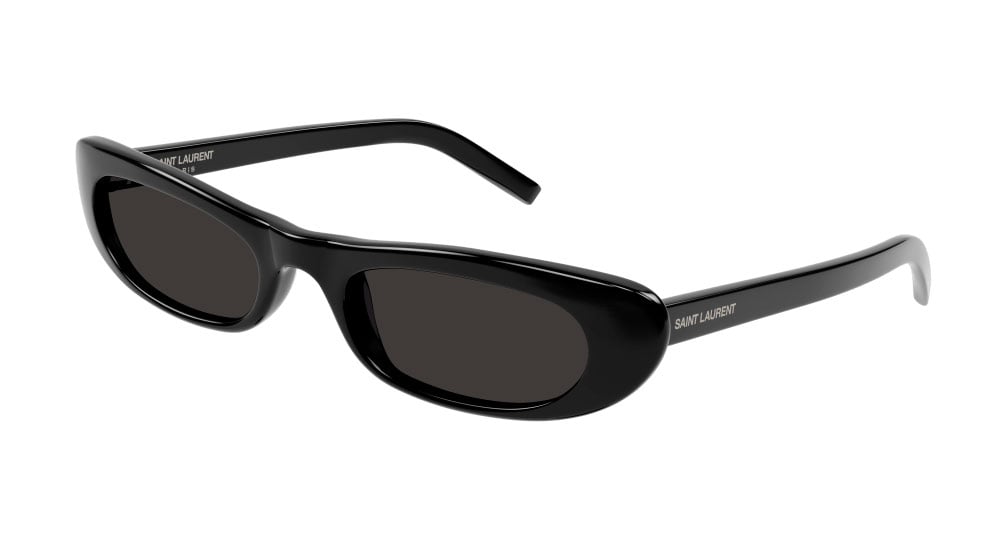


If you want to eliminate glare from your glasses, the most effective way is to use lenses with anti-reflective treatment. When it comes to taking photos or shooting video, the trick is to position the lighting at 45 degrees to your face or use polarizing filters to prevent light from bouncing off the glass. If you notice that your glasses don't sit right while shooting, we recommend checking out these tips for a perfect fit.
Why glasses have reflections: what really happens
Those reflections we see in glasses go through a physical process called specular reflection. Basically, it occurs when light hits a smooth, polished surface, such as the glass or polycarbonate of the lens, and bounces off at the same angle at which it arrived. Then, instead of passing through the glass to reach the retina, some of the light returns to the source or camera.
This is not only an aesthetic problem in images, as it also reduces the light reaching the eye, which leads to eyestrain. So, to solve this, advanced lens technologies have been developed that let light through much more efficiently and eliminate those annoying glints.
How to remove reflections from glasses in photos and streams
If you create content, you already know that reflections on your glasses are a real headache, because they block your eyes and distract the viewer. The problem is almost always the front lighting; it happens that when you put the softbox or the ring light right in front of it, the lens glass becomes a mirror.
How to adjust the light: Angles and where to put the spotlights
The basic rule in any set is to avoid frontal light. The most recommended is to place light sources at a 45-degree angle to the nose. If you move the spotlight to one side and turn it up a bit, the reflection bounces off what the camera picks up, so the eyes are fully visible.
If you still see the reflection, try raising the temples of your glasses a little bit to tilt the lenses. This simple adjustment changes the direction of the light bounce so it doesn't end up on the camera lens. If you find that the rubbing bothers you, you can check out these tips on how to avoid nose marks on your nose.
How to remove reflections from glasses in photos and streams
If you create content, you already know that reflections on your glasses are a real headache, because they block your eyes and distract the viewer. The problem is almost always the front lighting; it happens that when you put the softbox or ring light right in front of it, the lens glass becomes a mirror. To keep your lenses impeccable and without distractions, we recommend you to follow this guide on how to clean your Ray-Ban glasses properly.
How to adjust the light: Angles and where to put the spotlights
The basic rule in any set is to avoid frontal light. The most recommended is to place light sources at a 45-degree angle to the nose. If you move the spotlight to one side and turn it up a bit, the reflection bounces off what the camera picks up, so the eyes are fully visible.
If you still see the reflection, try raising the temples of your glasses a little bit to tilt the lenses. This simple adjustment changes the direction of the bounce of light so that it does not end up on the camera lens.
How to use polarizing filters and diffusers
If moving the lights doesn't work for you, then circular polarizing filters (CPL) are the best option. They basically work like a grid that cuts off light waves that vibrate in certain directions, thus removing reflections from things that aren't metal, such as glass. If you are looking for a similar visual protection, you can check the best models of photochromic glasses to adapt your vision to light changes.
[*14718601462083,14921205842243,14832142418243,14720562463043,14718264410435*]
It is also key to use diffusers, whether they are white fabrics, screens that pass the light or large softboxes. It happens that hard light leaves very strong and marked brightness, but soft light distributes everything better, so the reflections do not bother so much and are easier to control.
Post-production software and tricks
It's best to fix everything when shooting, but editing software can also help. For example, in Photoshop you can use the "Clone Stamp" or the "Corrector Brush" to erase small highlights. And if you use Premiere or DaVinci Resolve, you can make tracking masks to lower the exposure on the parts where the reflection is most annoying.
How to use polarizing filters and diffusers
If moving the lights doesn't work for you, then circular polarizing filters (CPL) are the best option. They basically work like a grating that cuts off light waves vibrating in certain directions, thus removing reflections from things that are not metal, such as glass.
It is also key to use diffusers, whether they are white fabrics, screens that pass the light or large softboxes. It happens that hard light leaves very strong and marked brightness, but soft light distributes everything better, so the reflections do not bother so much and are easier to control.
Post-production software and tricks
It's best to fix everything when shooting, but editing software can also help. For example, in Photoshop you can use the "Clone Stamp" or the "Corrector Brush" to erase small highlights. And if you use Premiere or DaVinci Resolve, you can make tracking masks to lower the exposure on the parts where the reflection is most annoying.
But be careful, post-production is basically a patch. An optical solution will always be better than a digital one, so you save hours of editing and the look is much more natural.
How to avoid reflexes in everyday life
And it's not just with the camera, reflections are a real nuisance for all of us. Being dazzled all the time, especially when you drive at night or spend hours in front of the monitor, ends up giving you visual asthenia and headaches. That's why it's a good idea to buy glasses that can handle light well, such as oakley photochromic glasses that adapt to changes in lighting, or get to know glasses with yellow lenses, which are beneficial for improving contrast in low-visibility conditions.
[*649181200707*]
What is anti-reflective (AR) treatment used for?
The anti-reflective (AR) treatment basically applies microscopic layers of transparent materials that eliminate light reflections. This is not to be confused with hydrophobic coatings, which are used to prevent water from sticking, because AR only aims to make everything more transparent.
But be careful, post-production is basically a patch. An optical solution will always be better than a digital one, so you save hours of editing and the look is much more natural.
How to avoid reflexes in everyday life
And it's not just with the camera, reflections are a real nuisance for all of us. Being dazzled all the time, especially when driving at night or spending hours in front of the monitor, ends up giving you visual asthenia and headaches. That's why it's a good idea to buy high-quality glasses that know how to handle light well, like the ones you can find in luxury Chanel models or in the versatility of Etnia Barcelona sunglasses.
[*640123568451*]
What is anti-reflective (AR) treatment used for?
The anti-reflective (AR) treatment basically applies microscopic layers of transparent materials that eliminate light reflections. This is not to be confused with hydrophobic coatings, which are used to prevent water from sticking, because AR only aims to make everything more transparent.
Polarized glasses: in which cases are they the best option?
Let's be clear: polarized glasses are for outdoor use only. They basically serve to block light bouncing off flat surfaces, such as wet asphalt, snow or water. That's why they're great for driving or playing sports outdoors, as they remove that glare that leaves you practically blind.
If you're going to get into more rugged activities, it's best to look at specialized mountaineering eyewear, which already combines polarization with high UV protection. Also, if you're looking for something that combines performance and style, Oakley' s photochromic models are a great investment so you won't suffer from sudden changes in light.
[*649181200707*]
Cleanliness and maintenance: do not allow dirt to impair reflections
Between skin oils, dust and fingerprints, the lenses are filled with irregularities that scatter the light, thus causing those annoying reflections or the typical "halo" effect. This is why keeping the lenses clean is the first thing to do to avoid glare.
To make them perfect, you can take a look at this specialized cleaning guide and always use microfiber cloths and special liquids for this. Don't even think of using toilet paper or a T-shirt, because you could make micro-scratches without realizing it. And if you already have a damaged surface, better check the myths about how to remove scratches; so you don't make the lens worse with home remedies that can worsen the condition of your glasses.
Buying guide: What to look for when choosing glare-free glass?
When you buy new glasses, don't just look at how pretty they look. The quality of the material and the treatments they come with from the factory are what decide how much glare you will have. When choosing, always prioritize lenses with anti-reflective treatment.
Lens material: High index lenses usually need stronger anti-reflective treatments so that they do not shine too brightly.
Frame type: Depending on your face, it is essential to choose frames that are ideal for round or angular faces, because if the lens is not well positioned in relation to the eye, there may be more reflections.
Construction: See if you prefer to choose between plastic or metal frames, depending on whether you are looking for something stronger or lighter.
Don't forget that the main thing is that they should be comfortable, so to avoid discomfort, take a look at the tips to prevent your glasses from leaving marks on your nose. Also, if you need to correct more than one thing, there are progressive lens options that already have the AR treatment in all vision zones. Oh, and so that the light doesn't enter through the sides, it's key to find the ideal size according to the shape of your face.
Frequently asked questions about reflections in glasses
Can I put anti-reflective coatings on glasses that are already prescription?
In reality, it is very complicated and even risky. To apply the AR treatment requires heat and vacuum processes that could deform the lens or change the prescription. For this reason, it is best to replace the lenses with new ones that already come with the treatment from the factory.
Frequently asked questions about reflections in glasses
Can I put anti-reflective coatings on glasses that are already prescription?
In reality, it is very complicated and even risky. To apply the AR treatment requires heat and vacuum processes that could deform the lens or change the prescription. For this reason, it is best to replace the lenses with new ones that already come with the treatment from the factory.
Why do my new glasses have more reflections than my old ones?
It usually happens because of a couple of things. Maybe your old glasses have already lost their anti-reflective coating through wear and tear and it's not as noticeable, or you're now wearing a different material, such as polycarbonate, which in itself reflects more than organic glass. To keep them clear, it is best not to neglect cleaning.
Can I remove reflections in video calls without having to change my glasses?
Yes, you can. Try tilting your head down a bit or raise the monitor so that the light from the screen doesn't hit you directly in the eyes. Another option is to use a lamp that gives indirect light, pointing to the wall in front of you, instead of having the light hitting you in the face. Also, it would be good to know how to adjust your glasses correctly, because if they are too close to the eyelashes, the light bounces back in a different way.
It usually happens because of a couple of things. Maybe your old glasses have already lost their anti-reflective coating through wear and tear and it's not as noticeable, or you're now wearing a different material, such as polycarbonate, which in itself reflects more than organic glass. To keep them clear, it is best not to neglect cleaning.
Can I remove reflections in video calls without having to change my glasses?
Yes, you can. Try tilting your head down a bit or raise the monitor so that the light from the screen doesn't hit you directly in the eyes. Another option is to use a lamp that gives indirect light, pointing to the wall in front of you, instead of having the light hitting you in the face. Also, it would be good to know how to adjust your glasses correctly, because if they are too close to the eyelashes, the light bounces back in a different way.


